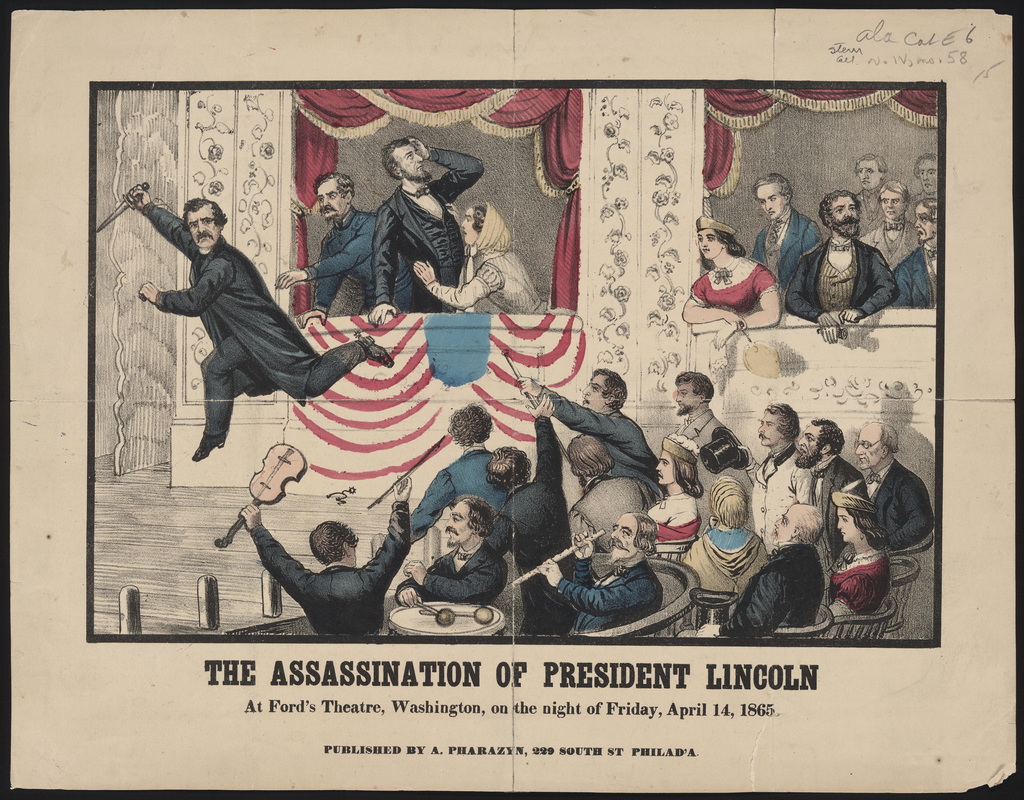
Lincoln was shot in a theater. We "see" JFK murdered on the Zapruder film. The events of 9/11 were brought to us on television. Is history really a series of presentations with actors and props?
|
Lincoln was shot in a theater. We "see" JFK murdered on the Zapruder film. The events of 9/11 were brought to us on television. Is history really a series of presentations with actors and props?
0 Comments
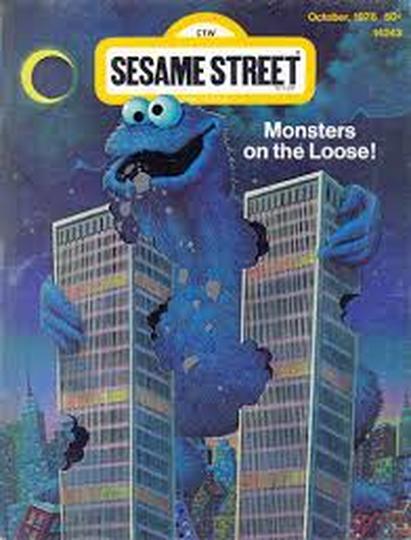 I discussed my latest book Was 9/11 a Movie? with Dr. Kevin Barrett on "No Lies Radio" last Friday night. I delivered the message that the events of 9/11 were scripted and fed to the public much like a movie.
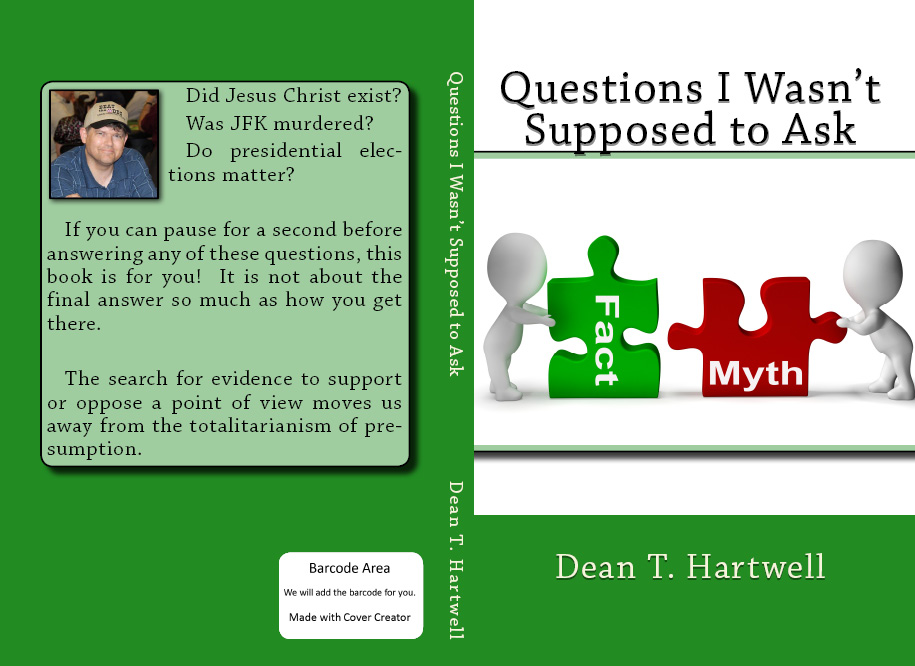
No one seriously challenged the authenticity of my theory. Some have challenged its audacity. How dare I say that 9/11 was a faked event? While these critics slowly realize the facts that lead me to this conclusion, spelled out clearly in Was 9/11 a Movie?, I have pondered whether other historical events were likewise staged. As I suggested in Questions I Wasn't Supposed to Ask, all of the evidence that someone murdered President Kennedy comes from media sources: the death certificate, the murder weapon, the bullets, etc. This evidence works to "prove" the assassination, but may also be explained by members of a coup feeding false information to a subdued media. And the Zapruder film clearly reveals a splice that could indicate multiple "takes" of a propaganda film. Is faking history so hard to believe? Planning a narrative is the best way to control the narrative later. Visual images on television can be used effectively to persuade the public that something happened, even though it did not. Witness the "nineteen Arab hijackers" accused of flying planes into the World Trade Center on 9/11. Their images were splashed on television screens throughout the world and most presumed their guilt EVEN THOUGH THERE WERE NO HIJACKINGS! I have written recently of my doubts that other events really happened as reported. Events like Sandy Hook, the Oregon shootings, etc. How many fake events does it take to allow us to predict future events? Consider the numerical order 1,4,9. If the numbers go on as 16, 25, 36... we can establish a pattern based upon square numbers. We can do the same when we establish that events have been faked. Do we have the audacity to seek reality when our leaders define it for us? 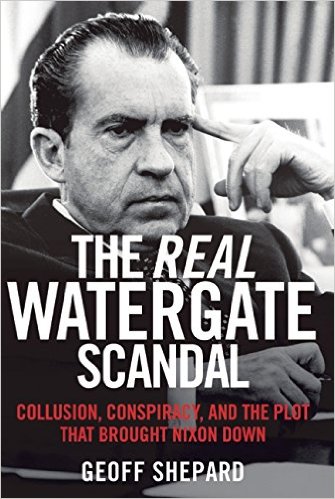 I just read The Real Watergate Scandal by Geoff Shepard. A White House staff member for President Nixon, the author tells a story about Watergate rarely heard in the media or in books written about Watergate.
That is one good reason to read this book. Another good reason is his ability to pick apart the familiar arguments against Nixon. You will read of the "smoking gun" taped conversation between the President and top aide H.R. "Bob" Haldeman. I had always thought that Nixon agreed with Haldeman to get the CIA to interfere with an FBI investigation of the Watergate hotel break-in. The author provides factual support for belief that Nixon simply wanted to protect the identities of Democratic contributors to his campaign. And the storied "18 1/2 minute" gap on another tape? There may not have been anything of interest on it (although I am still curious as to why it was intentionally erased). If you still think John Dean is a "good guy" in this matter, give this book a read.  What answer are you looking for? That's the first place to start.
A Marvelous Read 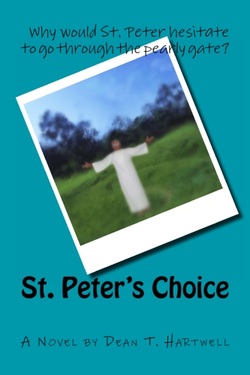 Click the picture to buy this book! Click the picture to buy this book! Rating: 5.0 stars
Reviewed by Jack Magnus for Readers' Favorite St. Peter's Choice is a metaphysical novel written by Dean T. Hartwell. It takes place on Judgement Day, the day when the saved are rewarded with Heaven, and the sinners are consigned to lakes of fire. St. Peter is reading the names from the list that God has given him. While he is doing so, he happens to overhear a conversation between God and a non-Christian. This person had lived a good and virtuous life, but did not embrace the concept of Jesus as his personal savior. God faults the man for not confessing his sins and sends him to hell. The man answers that losing one's integrity is worse than being sent to hell. The man then meets two other rejected souls in a place where he hears the crackling of flames. They question the power of those flames, and the flames disappear. St. Peter is intrigued by what he hears and goes to converse with the three. Dean T. Hartwell's metaphysical/philosophical novel, St. Peter's Choice is a marvelous read. Hartwell contrasts what St. Peter remembers of his time with Christ with what his informants are telling him of the Bible as they know it. Hot-button issues such as gay marriage, women's equality and evolution pop up during the conversation. One particularly interesting chapter is the gospel according to X, wherein X tells what he thinks Christ's story is. This gospel made a lot of sense to me. Other important issues that are brought up in St. Peter's Choice are how some gospels were not included in the Bible as not pushing the church leaders' agenda, and how greedy, mean-spirited and hateful people can be accepted into heaven just because of their belief in Christ as a personal savior. At what cost to your soul and integrity do you walk through those pearly gates? That's the decision St. Peter must make and it's grand reading the dialogue as he makes up his mind. Rating: 5.0 stars Reviewed by Melinda Hills for Readers' Favorite If you don’t believe in heaven, is hell real? In St. Peter’s Choice by Dean T. Hartwell, the traditional concept of the Last Judgment is under careful scrutiny with the application of logic. Inconsistencies in what Christians believe to be the ‘Word of God’ are brought into question and the validity of the Bible itself is examined in light of modern research. By following his curiosity, St. Peter learns of the use of free will to reach decisions about what to believe instead of living life based on blind faith and obedience. He understands that choices have consequences, but is surprised to find that the consequences are not real when there is no belief in them or their alternatives. Heaven may just be how one lives life – not some illusion that is promised as a reward for accepting a particular set of beliefs. Dean T. Hartwell uses a fictionalized St. Peter to express his opinions about the nature of God and blind belief in what have traditionally been seen as His laws. St. Peter’s Choice essentially outlines what could be called flaws in the logic of Christian dogma and questions why a loving God would keep anyone from the Kingdom of Heaven. He proposes that Jesus was speaking in code and was actually part of a conspiracy to overthrow Roman rule. That leads to the assertion that the Bible should be taken figuratively and not literally, and that to insist on adhering to it word for word is to defy logic and common sense. This is great reading as a starting point for an interesting discussion or as a stepping stone to learn more about the modern quest for understanding other possible stories of Jesus.  Extremism in the defense of liberty is no vice - United States Senator Barry Goldwater
Many political observers cringed when candidate Barry Goldwater delivered this phrase at the Republican National Convention in 1964. It sounded like Goldwater would put no limit on United States intervention in Viet Nam. Years later, I believe Goldwater’s comment reflects the way the world really works. The words are malleable enough to justify any action taken for any cause. What is extremism? It depends upon to whom one refers. Goldwater spoke by implication of aggression by the old Soviet Union or North Viet Nam. Perhaps tacitly, he implied the reason there was no limit to actions we were willing to instigate was because we feared what the “enemy” might do. So, if we believe another nation or group of people oppose us, or may take something we want, they are “extremists.” We believed that North Viet Nam was a threat to our ally South Viet Nam, so some of the forces in the Gulf of Tonkin contacted President Johnson and lied about the North Vietnamese firing upon our ships. Goldwater backed Johnson’s subsequent response to step up the bombing and to ask for Congressional support for expanded force in that region. We were not extremists. We just did what we had to do to protect an ally and our interests in that area of the world. We also did not want anyone else in the world to believe we would back down from the threat the “enemy” posed to us. In short, we can use extreme measures, but we are not extremists. What is liberty? Again, it seems to matter whose liberty to which we refer. Our liberty is something we find necessary to defend. Our Declaration of Independence makes mention of “life, liberty and the pursuit of happiness.” Liberty places second after the need to live first but before our own happiness. It seems, then, that life is meaningless without liberty. The irony is not lost upon me that we often destroy the liberty of others (by invading, bombing, disenfranchising, etc.) to make sure that we have our own. We must fail to recognize that simple reciprocity would deprive us of what we say we prize. So what, then, do we make of vice? It seems that we do not assign the word vice to ourselves but rather to those whom we oppose. The communists, the terrorists, the extremists, the fascists and everyone else our nation has cornered at the point of a gun. The threats we perceive are wrong; the threats we use to counter the perceived threats are right. I guess, in my heart, I know Goldwater was right. We do whatever we think necessary to make the world safe for us to dominate. Then we plead danger because people ask too many questions when the going is safe. Goldwater’s only real vice was telling the truth.  Dean T. Hartwell pulls no punches about the events of 9/11. There were no hijackings, for one thing. And none of the planes alleged as part of the plot actually flew any passengers!
Hartwell admits he was mistaken in previously saying that passengers landed in Cleveland that day. After reviewing all available information, he says that Flight 175 likely landed in Cleveland but no passengers were on board! This book calls out those who have lied to us about 9/11 and explains to the reader why they lied. Then he describes the road to a peaceful society as a long and winding one, but the road he prefers over hearing lie after lie!  This is Dean T. Hartwell's final say on what happened to the alleged passengers and planes of 9/11. He also talks about the value of truth seeking to our society.
He talks about events in recent history. The JFK assassination, the Viet Nam War, Sept 11, etc. Our leaders and the media frequently lie to us about these kinds of events. Lies are nothing new. Most people have been lied to most of their lives. (Santa Claus - a man in a red suit flown by reindeer delivering gifts to millions of kids on one night!). No big deal. What this book does is to tell the reader why our leaders lie. And how they benefit from it. This book won’t change the world. That’s OK. The world isn’t going to change because someone says someone is lying! But maybe some people will.  The events of 9/11 were a hoax. I spent several years researching the event and have presented my conclusions on this topic. People are free to read what I have to say and agree or disagree with those conclusions.
My question now is: what should we who are convinced of the falsity of the official theory of 9/11 want? We will never convict those responsible for this fraud. We will never get the mainstream media to show our side to the story. We will never reverse the policies that came about as a result of the fraud. With that in mind, we can and should focus on something that we can attain. It is something far more basic than any of these other goals and perhaps even more useful. It is the simple concept of freedom. The controversy over what happened on September 11 and many other events before and since has stoked the fears of all of us. Fear of terrorists. Fear of foreigners. Fear of flying. Fear of freedoms being taken from us. Fear of the future. In the words of Franklin Roosevelt, we need freedom from fear. We can work toward this goal by untangling us from what makes us so afraid: the unknown. Answers to a few simple questions would be helpful. Are you afraid the government will take your guns (or other freedoms)? Do you often believe what the same government tells you about 9/11 and other events? Do you believe history repeats itself? Do you believe the future will be much different than the past? If you are willing to hold two contradictory thoughts at the same time, will you ever achieve freedom of thought? Welcome to a future that will be a lot like what we have already experienced. The government and media will continue to lie to protect interests. People will continue to predict Doomsday. The truth about anything important will be known but never stated openly until it no longer matters. Clear your mind and follow the way of the world. Not a straight line to disaster but one big familiar circle instead. |
AuthorDean Hartwell keeps pursuing the truth about those who govern us. Categories
All
Archives
May 2020
|
 RSS Feed